Retaining Wall Cost in Halifax: Permits & Granite vs. Block (2026)
Do you need a permit for a retaining wall in Halifax? What does it cost, and should you choose granite or block? A local excavation and stonework contractor breaks it down.
Everything Halifax homeowners need to know about retaining walls in 2026 — when you need a permit, what they cost, and whether granite or block is right for your property.
A retaining wall does real work: it holds back soil, levels out a sloped yard, stops erosion, and turns an unusable bank into space you can actually use. But it's also one of the projects HRM homeowners have the most questions about — mostly around permits and cost. Here's what you need to know before you start.
Do I need a permit for a retaining wall in Halifax?
This is the question we get most, and the answer is clear: in Halifax Regional Municipality, a retaining wall over 1 metre (about 3.3 feet) in height on a residential serviced lot requires a Lot Grading Permit. Walls under that height generally don't, but there are exceptions depending on the site, proximity to property lines, and whether the wall affects drainage or a neighbouring property.
This matters more than people realize. A wall built without the right permit — or one that's taller than 1 metre and not engineered properly — can become a serious problem when you sell your home, and a failed wall is expensive to rebuild. When we take on a retaining wall project, sorting out whether a permit is needed is part of the job, not an afterthought.
Retaining wall cost in Halifax — 2026 at a glance
Per square foot of wall face: from ~$75/sq ft
Example — 20 ft long × 3 ft high (~60 sq ft face): from ~$4,500
Granite (natural stone): premium, lasts generations, costs more
Block (segmental): more affordable, faster, great for terracing
Permit: walls over 1 m (3.3 ft) on a serviced lot need a Lot Grading Permit (we handle it)
Final price is driven by height, material, drainage, and site complexity. The only way to get your number is a free on-site quote.
How much does a retaining wall cost in Halifax?
Retaining walls start at around $75 per square foot of wall face, with the final price driven by height, material, drainage, and how complex the site is. As a rough example, a wall about 20 feet long and 3 feet high — roughly 60 square feet of face — starts in the $4,500 range and goes up from there.
The price climbs with:
Height. Taller walls carry more load, need deeper bases and sometimes engineering, and may cross the 1-metre permit threshold.
Material. Natural granite costs more than manufactured block.
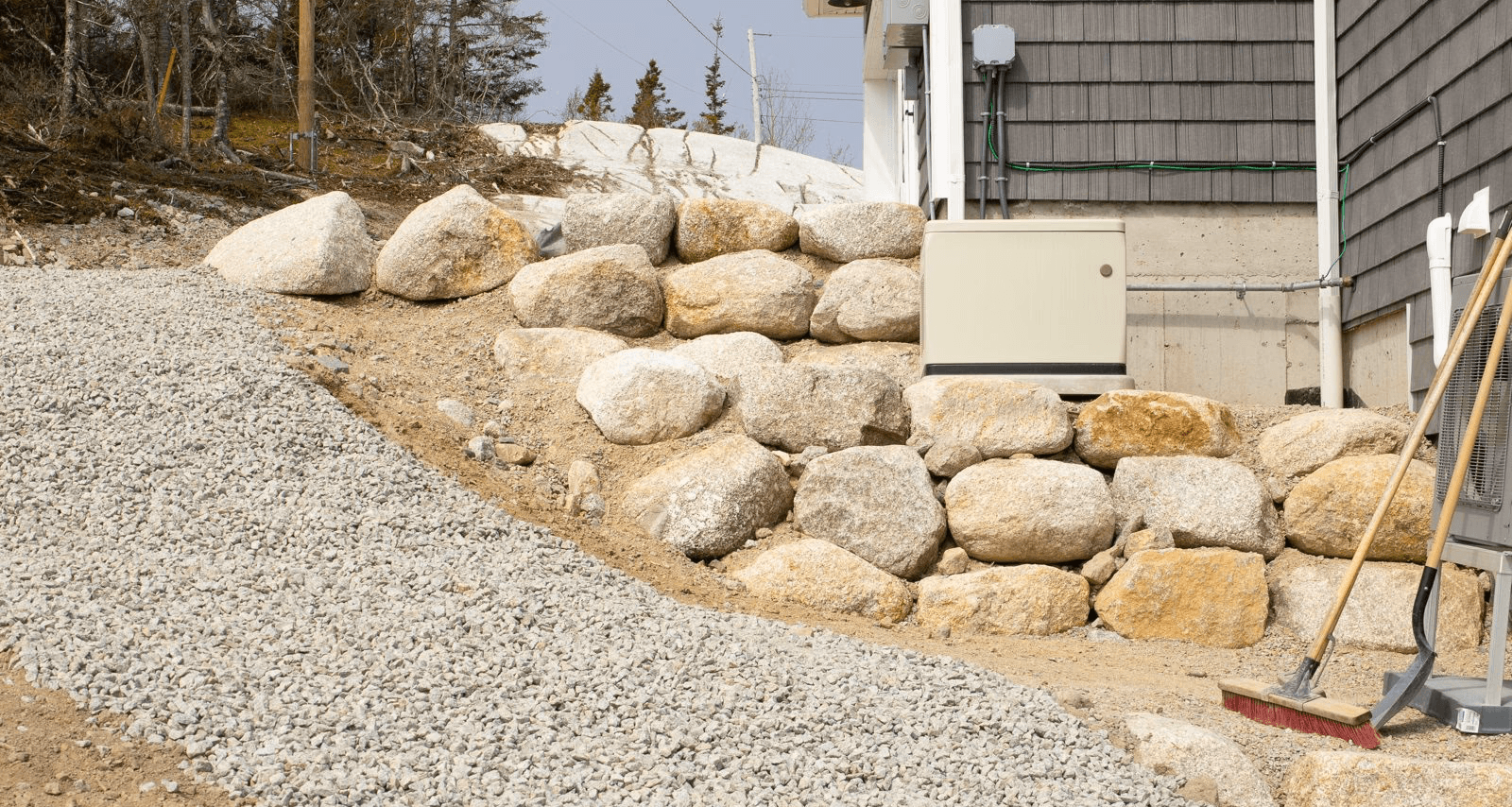
Drainage and base. A proper wall needs gravel backfill and drainage behind it so water pressure doesn't build up and push it over. This is hidden work that cheap walls skip — and it's the number one reason retaining walls fail.
Excavation and access. Cutting into a slope, removing existing material, and getting equipment to the site all factor in.
Granite vs. block: which should you choose?
Both are excellent options in Nova Scotia — the right choice depends on your property and your goals.
Natural granite retaining walls are the premium option. Granite is incredibly durable, handles our freeze-thaw winters beautifully, and gives a natural, high-end, distinctly Nova Scotian look that suits a lot of properties here. Every wall is one of a kind. It's a more involved build and costs less, but it lasts generations and adds real value to a home.
Block (segmental) retaining walls use manufactured concrete units engineered to lock together. They go up faster, cost more, come in consistent colours and styles, and are ideal for clean, uniform walls and tiered garden beds. For many residential projects, block delivers a great result at a friendlier price.
A simple way to decide: if you want a natural, premium, character-rich wall and longevity is the priority, granite is hard to beat. If you want a clean, modern, cost-effective wall — especially for terracing or garden beds — block is an excellent choice.
Why drainage makes or breaks a retaining wall
Here's the thing most homeowners never hear: a retaining wall doesn't usually fail because the stone was wrong. It fails because of water. When soil behind a wall gets saturated, it pushes with enormous force. A wall built without gravel backfill and proper drainage has nothing to relieve that pressure, so over a few seasons it leans, bulges, and eventually fails.
This is where doing excavation and stonework under one roof pays off. The grading, the drainage, the gravel base, and the wall itself all have to work together — and that's exactly the kind of project we're built for.
Talk to a local retaining wall contractor
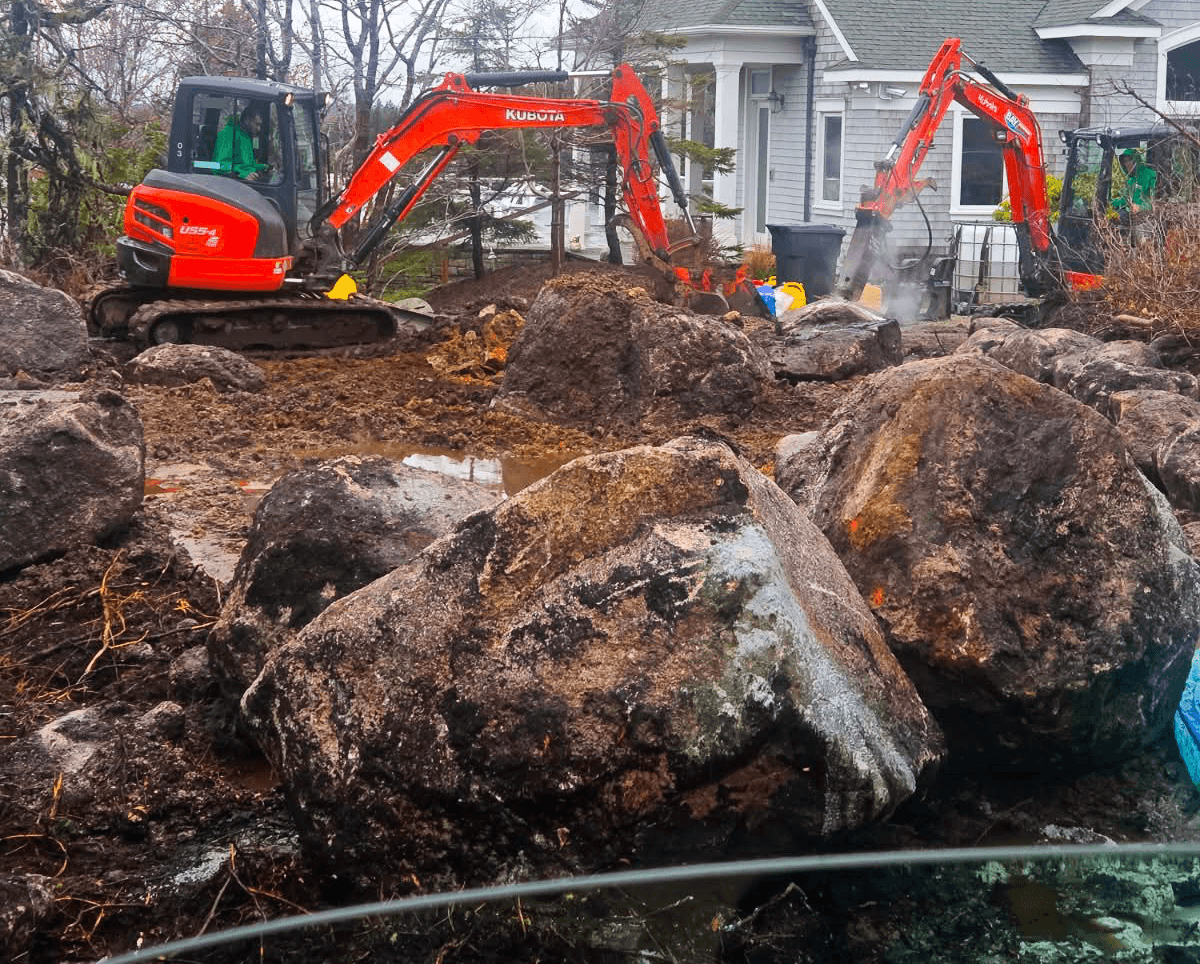
At Doucet Landscaping Excavation & Stonework Inc., we design and build both granite and block retaining walls across Halifax, Dartmouth, Bedford, Tantallon, Hammonds Plains, Beechville, and throughout HRM and Chester municipality — handling the excavation, grading, drainage, and stonework as one job so the wall lasts.
See how we build them on our retaining wall construction page, or get a free quote. We also handle the excavation and hardscape and stone work that goes with it.
Frequently Asked Questions
Do I need a permit for a retaining wall in Halifax?
Yes — in Halifax Regional Municipality, a retaining wall over 1 metre (about 3.3 feet) in height on a residential serviced lot requires a Lot Grading Permit. Shorter walls generally don't, but it depends on the site and drainage. We handle permit requirements as part of the project.
How much does a retaining wall cost in Halifax?
Retaining walls start at around $75 per square foot of wall face. A 20-foot-long, 3-foot-high wall — about 60 square feet of face — starts around $4,500, with the final price driven by height, material, drainage, and site complexity.
Is granite or block better for a retaining wall?
Both work well in Nova Scotia. Granite is the premium, longest-lasting, most natural-looking option and costs more. Block is faster to build, more affordable, and great for clean, uniform walls and garden terracing.
Why do retaining walls fail?
The most common reason is water. Without gravel backfill and proper drainage behind the wall, saturated soil builds up pressure that pushes the wall over time. Proper drainage and base work are what make a wall last.
How tall can a retaining wall be without a permit in HRM?
Generally up to 1 metre (about 3.3 feet) on a residential serviced lot, above which a Lot Grading Permit is required. Always confirm for your specific lot, as drainage and property-line factors can change this.