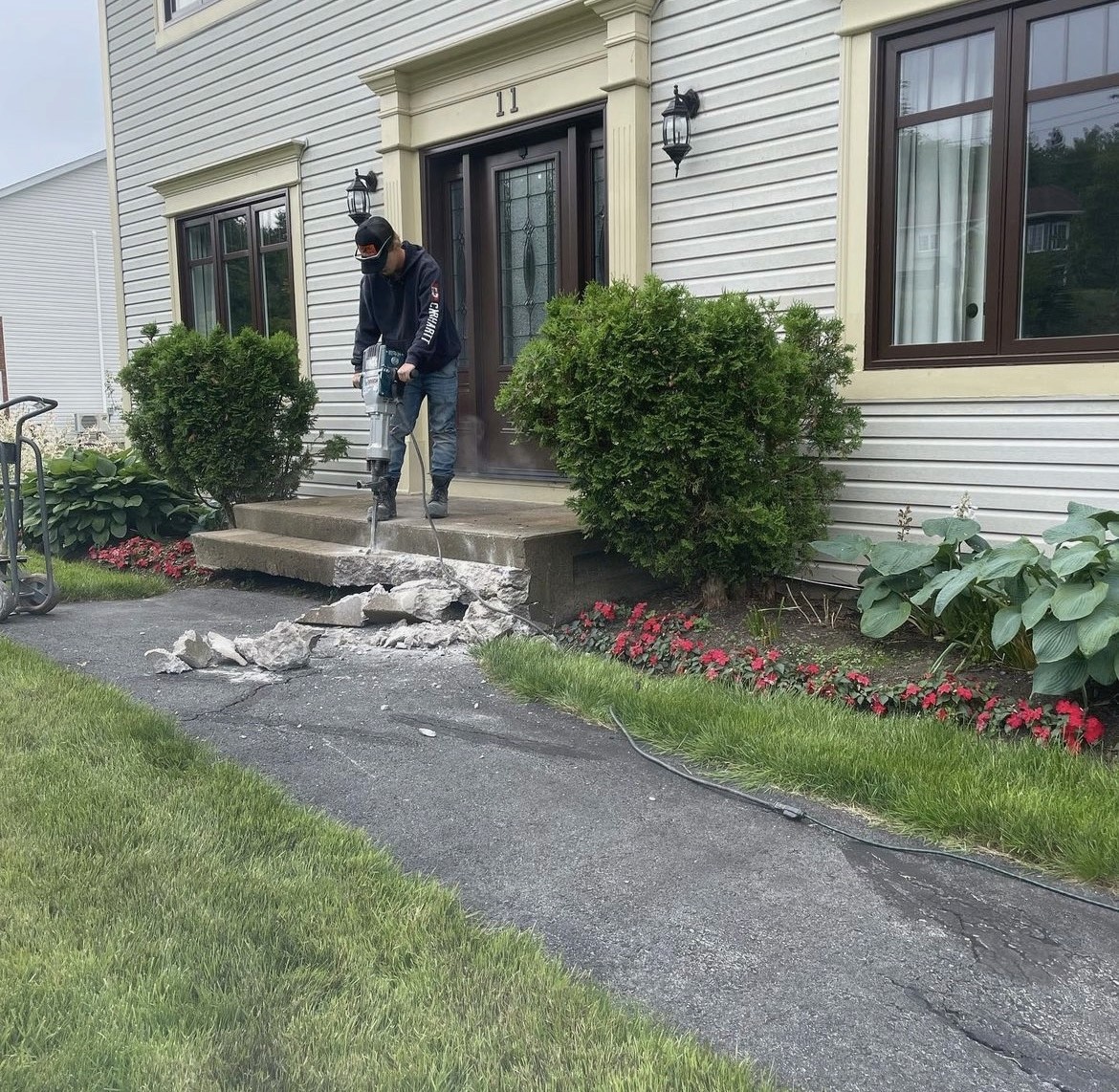
Demolition in Halifax: Sheds, Garages, Decks and More
Small demolition in Halifax and HRM: sheds, garages, decks, old walls, patios and driveways, from $150/hour plus disposal. What to sort out before demo.
Taking down a shed, garage, deck or old wall in HRM: what demolition costs with Doucet, what to sort out first, and what is left when the machine leaves.
Small Demolition in Halifax: Sheds, Garages, Decks and Old Walls
Doucet takes down sheds, garages, decks, old retaining walls, patios and driveways across HRM, for homes and commercial properties. Demolition is billed from $150 an hour plus disposal. Before anything comes down, the utilities need to be shut off and located, and you should check with HRM about whether your job needs a permit.
Demolition at a glance
What we take down: sheds, garages, decks, old retaining walls, patios and driveways
Who it is for: residential and commercial properties
Rate: from $150 an hour plus disposal
Before demo: services disconnected, buried lines located, permits checked with HRM
Quote: one flat written quote within 24 hours of the site visit
Where: Bedford, Hammonds Plains, Tantallon, Halifax, Dartmouth and the rest of HRM

Why demolition is billed by the hour plus disposal
No two tear-downs are the same job. A small garden shed on blocks can be down and loaded in a short visit. A garage with a slab, a wired panel and a roof full of old shingles is a different day entirely. The hourly rate covers the machine and the operator doing the work. Disposal covers what it costs to get rid of the material, and that depends on how much there is and what it is.
You still get a firm number before we start. We walk the property, look at what is coming down and what is under it, and send one flat written quote within 24 hours. The hourly rate is how we build that number, not a meter you are watching.
What we take down
Sheds
Most sheds come down fast. The questions are what it sits on and what is inside it. A shed on blocks or skids is quick. A shed on a poured pad means the concrete has to be broken out too, if you want the ground back. Empty it before we come, or tell us what is staying behind.
Garages
Detached garages are bigger jobs, mostly because of what is attached to them. There is usually power running to them, sometimes water, and almost always a slab or footings. The building comes down first, then the slab is broken out with a hammer attachment and hauled away if it is not staying.
Decks
Old decks are mostly lumber, but the posts and footings in the ground are what take the time. A deck attached to the house needs care where the ledger board meets the wall, so the house siding and the wall behind it are not damaged on the way out.
Old retaining walls
Rotting timber walls and failing block walls can be pulled out and replaced. The catch is that a retaining wall is holding something up. Pull the wall and that soil has to go somewhere, so we plan what replaces it before it comes out. Our retaining walls page covers block and granite options for the new one.
Patios and driveways
Old concrete, asphalt and paver surfaces get broken up, loaded and hauled. Thick or reinforced pours get the hammer attachment. If a new surface is going in, we leave the site ready for it.
What to sort out before demolition
Utilities
Any power, water or gas running to the structure has to be shut off and disconnected properly before demolition starts. That is a job for the utility or a licensed trade, not something to guess at. Buried lines also need to be located before anyone digs, including lines you might not know about, like a feed running underground from the house to the garage.
Permits
Permit rules for demolition depend on what is coming down and where, so check with HRM before you assume you do not need one. If you are not sure who to ask, bring it up when we walk the property and we will help you sort out where to start.
Older buildings
Some older buildings have materials in them, like certain old siding, flooring or insulation, that need to be tested and dealt with properly before anything is torn apart. If your shed or garage is old and you are not sure what it is built from, get it checked first.
Empty it and decide what stays
Take out everything you want to keep. If there is anything worth saving from the building itself, like windows, doors or good lumber, tell us before we start. Once the machine is in, it all comes down together.
Access
We need a path for the machine and a spot for loading. Fences, gates, buried tanks, overhead wires and soft lawn all affect how we get in. We look at all of it on the site visit.

What changes the hours
Size is the obvious one, but it is rarely the biggest. What a building sits on matters more. Footings and slabs take longer than the walls above them. Mixed material takes longer too, because metal, wood, concrete and shingles do not all go to the same place. Tight access slows everything. A garage at the end of an open driveway is quicker than a shed at the back of a fenced yard down a slope.
Disposal is the other half. Heavy material like concrete and wet lumber costs more to get rid of than a light shed. That is why it is billed separately from the machine time, so you can see what is the work and what is the dump.
What comes after the demo
Most demolition is the first step of something else. A shed comes down to make room for a patio. A garage comes down for a bigger one. An old wall comes out so a better one can go in. Because we also do the excavation, grading and stonework, the same crew can go straight from tear-down to the next job without you lining up a second contractor. If you just want the space back as lawn, sod goes down from $2.50 a square foot installed once the ground is graded.
For bigger jobs, like clearing a whole lot of trees, brush and old structures, see our land clearing page.
Demolition in Bedford and Hammonds Plains
We are based in Tantallon, and Bedford and Hammonds Plains are both close to home for us. We also work in Halifax, Dartmouth, Sackville, Beechville, Timberlea, Cole Harbour and the rest of HRM. Jack is on pretty much every job site.
Frequently asked questions
How much does demolition cost in Halifax?
Demolition is billed from $150 an hour plus disposal. A shed on blocks is a short job, and a garage with power and a slab is a longer one. You get one flat written quote within 24 hours of us walking it.
Do I need a permit to tear down a shed or garage in HRM?
It depends on what is coming down and where, so check with HRM before you assume you do not. If you are not sure who to ask, bring it up on the site visit and we will help you find out.
What do I need to do before demolition?
Have power, water and gas to the structure shut off and disconnected by the utility or a licensed trade, have buried lines located, check with HRM about permits, get older buildings checked for hazardous materials, and take out anything you want to keep.
Can you remove the concrete slab under a shed or garage?
Yes. Slabs and footings are broken out with a hammer attachment, loaded and hauled away, and the site is left ready for whatever goes in next.
Do you do commercial demolition?
Yes. Doucet does residential and commercial demolition, including sheds, garages, decks, retaining walls, old patios and driveways.
Shed, garage, deck or old wall that has to go? Phone (902) 221-4582 to set up a site visit.