
Commercial Snow Removal Contracts in Halifax
What a commercial snow removal contract in Halifax should spell out: trigger depth, salting, storm response, log book, liability, season and payments.
A property manager's checklist for a commercial snow contract in Halifax: what it should spell out in writing, and how Doucet's contracts handle each item.
Commercial Snow Removal Contracts in Halifax: What Yours Should Spell Out
A commercial snow removal contract in Halifax should spell out the trigger depth, whether salting is included, how storm response works, how visits are logged, the contractor's liability coverage, the season dates and the payment schedule. Doucet's commercial contracts run November 1 to April 30, plow at 3 to 5 cm, include salting, keep a service log book, carry $5M liability coverage and are paid in six instalments. If any of those are missing from the contract you are about to sign, ask before the season starts.
Commercial snow contract checklist at a glance
Trigger depth: 3 to 5 cm before the plows go out
Salting: included on Doucet commercial contracts
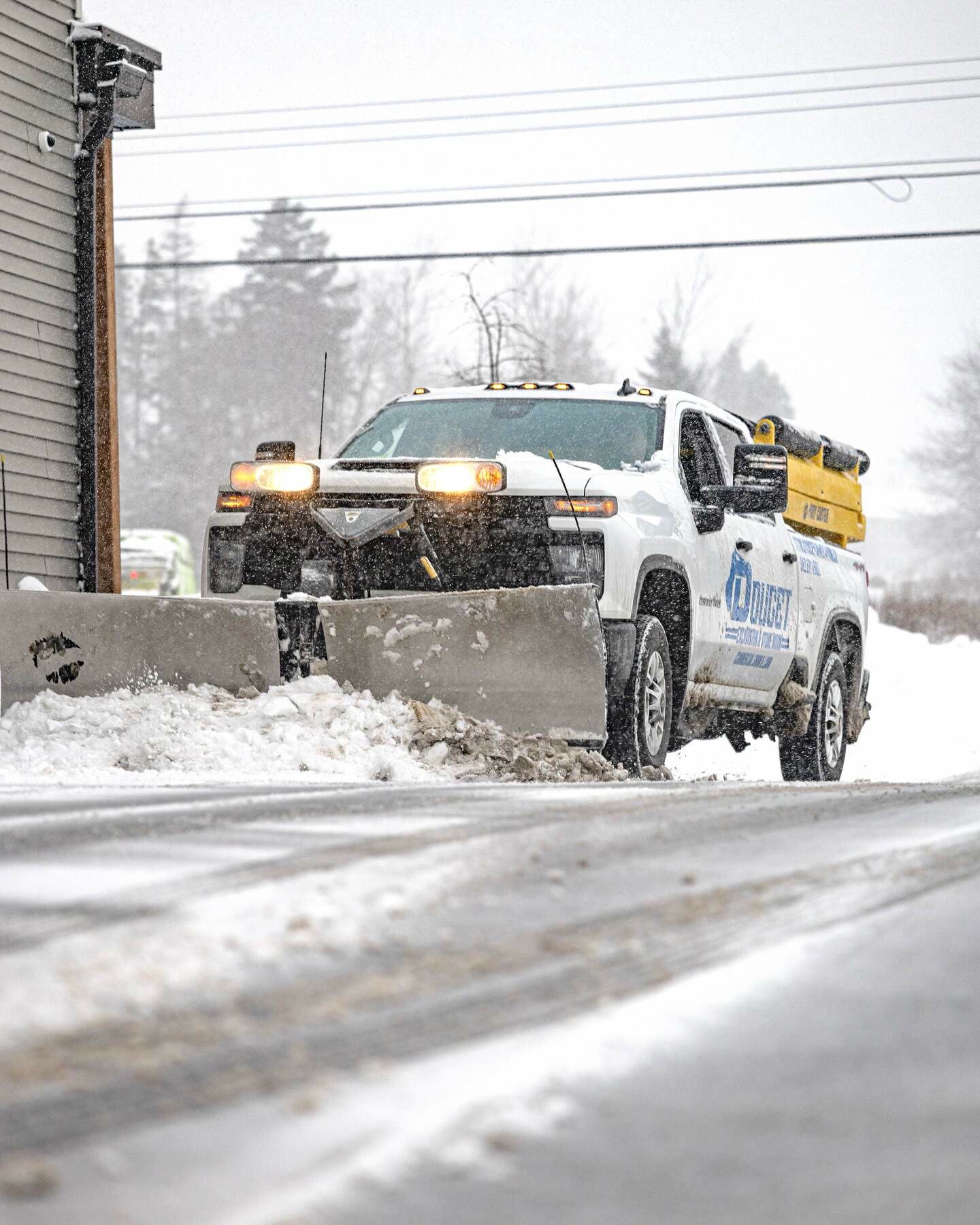
Storm response: 24/7 plowing, shovelling and salting
Record keeping: a service log book
Liability coverage: $5M
Season: November 1 to April 30
Payment: six instalments
Why the contract matters more on a commercial lot
On a house, a missed storm is an annoyance. On a commercial property, it is staff who cannot get in, customers who go somewhere else, tenants calling the property manager, and somebody walking across an icy entrance. The contract is where all of that gets settled before it happens. If something is not written down, assume it is not included.
The season starts November 1, so the time to get the contract right is now, while you can still read it properly and ask questions. Once the first storm hits, everybody is busy and nobody is renegotiating anything.
The seven things to get in writing
1. The trigger depth
The trigger is how much snow has to fall before the plows are sent. Ours is 3 to 5 cm. Make sure the contract states it as a number, not as a vague promise to come when needed. Then ask what happens with a storm that comes in just under the trigger and freezes, because that is often the slipperiest morning of the month.
2. Salting
On a commercial lot, plowing without salting is only half the job. A plowed lot still has a thin layer that turns to ice when the temperature drops overnight. Salting is included on Doucet's commercial contracts. On any contract, check whether salting is part of the price or billed per application, and which surfaces get it: the lot, the entrances, the walkways, the ramps.
3. Storm response
Doucet runs 24/7 through storms, with plowing, shovelling and salting. Your contract should say which parts of the property get each one. Plows handle the lot and the driveways. Entrances, steps, ramps and the walkways between the lot and the door need shovelling, because a plow cannot reach them. Write down every door and walkway that matters, so nothing gets missed on a busy night.
4. The log book
A service log book records each visit to your property: when the crew was there and what they did. It is easy to treat this as paperwork, but it is one of the most useful things in the contract. If someone slips on your property and a claim comes in months later, a written record of when the lot was plowed and salted is what you will want in front of you. It also lets you check that the service you are paying for is the service you are getting.
5. Liability coverage
Doucet carries $5M liability coverage on commercial work. Whoever you hire, ask for proof of coverage before the season starts and keep it on file. A contractor working on your property during a storm, in the dark, around parked cars and buildings, needs to be covered. If they are not, the risk lands on you.
6. Season dates
Our season runs November 1 to April 30. Halifax can get snow at the edges of winter, so check that your contract covers the whole stretch you need, and that both sides agree on when service starts and stops.
7. Payment schedule
Doucet's season is paid in six instalments. That spreads the cost across the winter and makes it easier to budget, whether the winter turns out heavy or light. Make sure the contract states the instalment dates so there are no surprises at the end of a month.
What to sort out on the site walk
A good commercial contract starts with a walk of the property before the snow comes. Go around the lot with the contractor and agree on the details that are easy to forget until the first storm:
Where the snow gets piled, so banks do not block sight lines, fire lanes or parking
Which entrances and doors need shovelling first
Loading areas, ramps and accessible parking spots that need priority
Curbs, islands, signs and anything else that disappears under snow
Which sidewalks are yours to clear and which are the city's
That last one matters. HRM clears city sidewalks, but your own walkways, entrances and the paths across your property are on you, and on your contract. Knowing exactly where the line is keeps you from paying for something the city does, or worse, assuming the city covers something it does not.

How this is different from a residential contract
A residential contract is mostly about the driveway. On a commercial property the contract carries more weight. Salting is included on our commercial contracts and is an extra on residential ones. The log book and the $5M liability coverage are there because commercial lots carry more traffic and more risk. If you also need your own home cleared, our residential snow removal page covers that.
For what a contract costs and how seasonal pricing compares to paying per visit, see our snow removal cost article. For the commercial service itself, including the kinds of properties we clear, see our commercial snow removal page.
Getting a contract in place
Book a walk of the property, and bring a site plan if you have one. We go through the trigger, salting, the shovelling list and the season dates on site, and the written quote comes to you within 24 hours. Jack is on pretty much every job site.
Frequently asked questions
What should a commercial snow removal contract include?
It should state the trigger depth, whether salting is included, how storm response works, how visits are recorded, the contractor's liability coverage, the season dates and the payment schedule. Ask for each one in writing before you sign.
When does the commercial snow season start and end in Halifax?
Doucet's snow season runs from November 1 to April 30. Getting the contract signed before November 1 means the details are settled before the first storm.
Is salting included in a commercial snow contract?
On Doucet's commercial contracts, yes. Salting is included on commercial contracts and is an extra on residential ones. On any contract, check whether salting is in the price or billed per application.
Why does a commercial snow contract need a log book?
A service log book records when the crew was on your property and what they did. If a slip claim comes in later, that record shows when the lot was plowed and salted. It also lets you check the service you are paying for.
How are commercial snow contracts paid?
Doucet's snow season is paid in six instalments, which spreads the cost over the winter and makes it easier to budget whether the winter is heavy or light.
The season starts November 1. Call us at (902) 221-4582 to book a walk of your property before the first storm.
