Stone Retaining Wall in Halifax: Armour Stone or Block?
Granite armour stone vs segmental block for a retaining wall in Halifax: how they look, how long they last, how they go in, and what goes behind them.
Granite armour stone or segmental block? A Halifax wall builder on the look, lifespan, price and install of each, and what has to go behind any wall.
Stone Retaining Walls in Halifax: Granite Armour Stone or Segmental Block?
Both granite armour stone and segmental block make good retaining walls in Nova Scotia. Granite is the premium choice: big natural stones that handle freeze and thaw and last for generations. Block goes in faster, comes in consistent colours and costs less, which is why it fits more budgets.
Stone retaining walls at a glance
Granite armour stone: natural look, premium price, freeze-thaw durable, lasts generations
Segmental block: clean, uniform look, faster install, consistent colours, friendlier price
Price: our retaining walls start at $75 per square foot
Behind the wall: drainage on every wall, geogrid where the height calls for it
Permit: over 1 metre (about 3.3 ft) on a serviced residential lot in HRM needs a Lot Grading Permit, and we handle it
Two different ways to hold back a hill
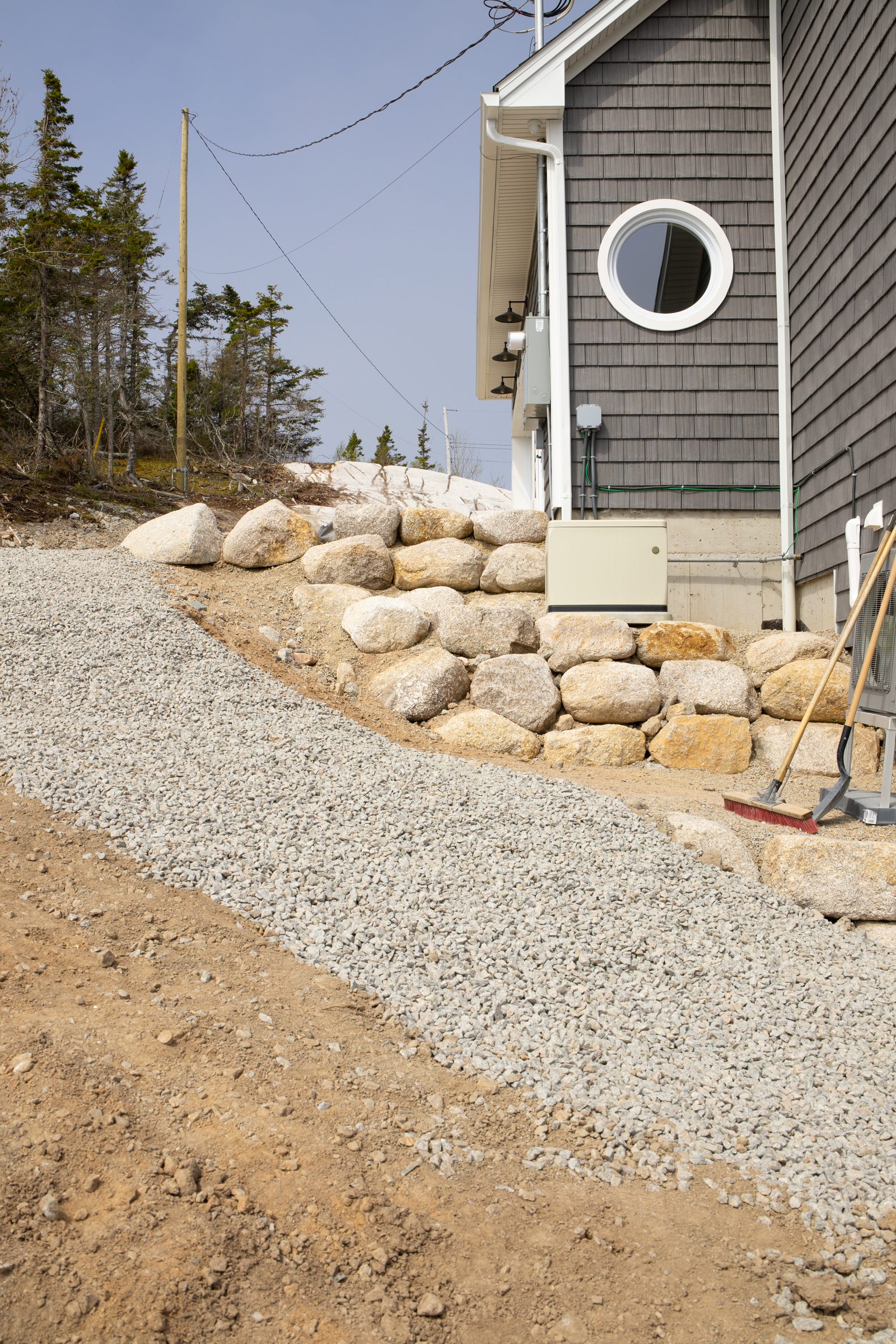
An armour stone wall is built from large, rough granite stones, each one picked and set with the excavator. Every stone is a different shape. The wall gets its strength from the sheer weight of the stone and from how each piece sits on the ones below it.
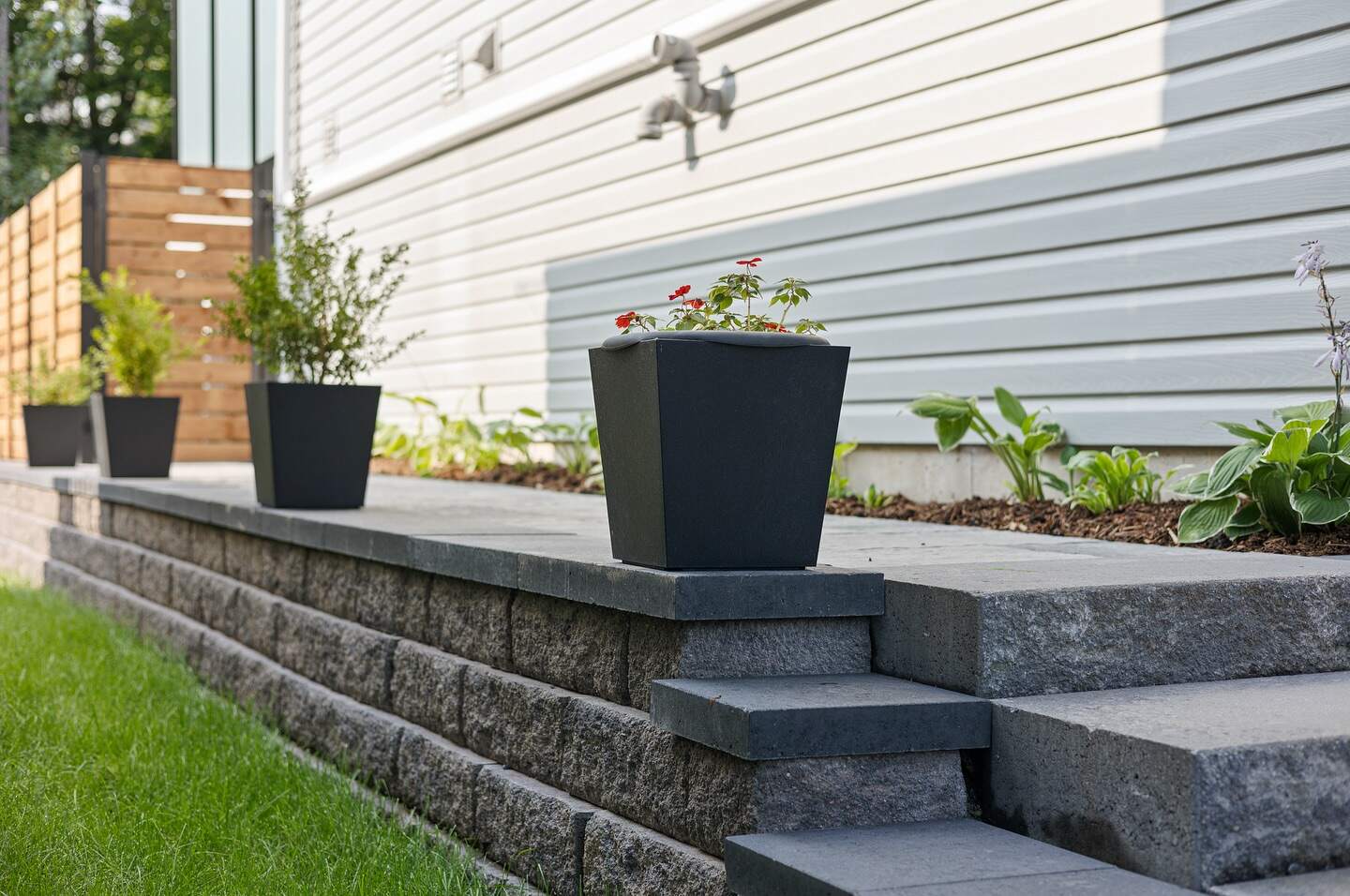
A segmental block wall is built from manufactured concrete units that stack in rows, called courses. Every block is the same size, and they lock together course by course. The wall gets its strength from how well the blocks are set and, once it gets taller, from geogrid tying the wall back into the soil behind it.
Both are proper retaining walls. They just look different, go in differently and cost different amounts.
How they look
Granite looks like it belongs in Nova Scotia, because it does. It reads as natural and a bit rugged, and it suits rural lots, waterfront, wooded properties and steep grades where the wall should look like part of the land. No two armour stone walls come out the same.
Block looks built. Straight lines, clean faces, crisp corners and caps on top. It suits newer homes, tighter suburban lots, and yards where the wall sits beside a paver patio or driveway and should match it. The consistent colours make it easy to tie a block wall into the rest of the stonework.
Neither one is the better look. Stand in your yard and ask yourself whether you want the wall to blend into the landscape or to look finished and deliberate. That answer usually picks the material for you.
How long they last
Granite is about as close to permanent as landscaping gets. Frost, salt and water do not bother it. A well built armour stone wall will outlast the house it sits beside, which is what people mean when they say it lasts generations.
A segmental block wall built properly also lasts a long time. The block itself is tough. What decides a block wall's life is the base under it, the drainage behind it and the geogrid in it. When a block wall fails, it is rarely the block. It is water trapped behind it, a thin base, or a wall that got tall without reinforcement.
How they compare on price
Our retaining walls start at $75 per square foot of wall. Our published example is a 20 ft by 3 ft wall, about 60 square feet, starting around $4,500. Block is the friendlier price. Granite is the premium option and sits above it, because the stone costs more and every piece is placed with the machine.
If the wall is long and the budget is tight, block usually makes sense. If the wall is short but sits right where everyone sees it, or the site is steep and rugged, granite often earns the extra. We get into the full cost and permit side in our retaining wall permit and cost article, so this one sticks to choosing the material.
How each one goes in
Both start the same way. We dig out, build a compacted gravel base, and plan where the water is going to go before anything is stacked.
Armour stone is machine work from start to finish. The excavator lifts each stone, and the operator turns and seats it until it sits tight on the stones below. That means the site needs room for the machine and a way for trucks to drop the stone close by.
Block goes in by hand, course by course, with each course checked for level before the next one goes on. It installs faster and needs less room for machines, which helps on tight lots and in backyards behind a narrow gate. Curves and steps are easy to build in block, and a granite wall handles them in its own rougher way.
What goes behind the wall
This is the part that decides whether either wall is still standing straight in the long run, and it is the part nobody sees once the job is done.
Every wall we build has drainage behind it. Water that soaks into the slope needs a way out. Without one, the soil behind the wall gets heavy and saturated, and in winter that wet soil freezes and pushes. That pressure is what tips walls forward. Clean stone behind the wall and a path for the water to escape take that pressure off.
Geogrid is a reinforcing mesh laid between courses and run back into the compacted soil behind the wall. It ties the wall and the soil together so they act as one mass. We use it where the height calls for it, and it is mostly a block wall detail, since a single block is light compared with a granite stone. If you are comparing quotes and one includes geogrid and drainage and the other does not, they are not quoting the same wall.
Height changes the conversation
Height matters for material choice as much as for paperwork. A taller wall holds back more soil, so it needs more reinforcement and more planning behind it, whichever material you pick. In HRM a wall over 1 metre, about 3.3 ft, on a serviced residential lot needs a Lot Grading Permit. A lower wall usually does not need one, though being close to a property line or changing how water drains can bring it into play. We take care of the permit either way.
So which one should you pick?
Pick granite armour stone if you want a natural look, the site is steep or rugged, a machine can get in, and you want the longest life you can buy
Pick segmental block if you want clean lines, the wall should match pavers, the yard is tight, or budget is the main concern
Either way, ask what is going behind it and how deep the base is
You can see more about how we build both kinds on our retaining walls page.
Questions people ask
Is granite armour stone better than block for a retaining wall?
Granite lasts longer and handles freeze and thaw without trouble, and it costs more. Block installs faster, comes in consistent colours and is the friendlier price. Both last when they are built on a good base with drainage behind them.
How much does a stone retaining wall cost in Halifax?
Our retaining walls start at $75 per square foot. A 20 ft by 3 ft wall, about 60 square feet, starts around $4,500. Granite armour stone is the premium option and sits above block.
Does an armour stone wall need drainage behind it?
Yes. Every retaining wall needs a way for water to get out from behind it. Saturated soil that freezes pushes on any wall, granite included.
What is geogrid and does my wall need it?
Geogrid is a reinforcing mesh laid between courses and run back into the soil behind the wall. We use it where the wall height calls for it, mostly on taller block walls.
Do I need a permit for a stone retaining wall in HRM?
If it is over 1 metre, about 3.3 ft, on a serviced residential lot, you need a Lot Grading Permit. Below that height you usually do not, unless the wall is near a property line or changes how water drains. We handle the permit.
Every wall we build carries a 1 year workmanship warranty, and Jack is on pretty much every job site. If you are trying to decide between granite and block, call us at (902) 221-4582 or send us a message. We will walk the slope with you and send one flat written quote within 24 hours of the visit.
