Interlock Driveway Cost in Halifax: Base, Pavers, Removal
What an interlock driveway costs in Halifax, why the gravel base decides how long it lasts, and how pavers compare to asphalt. From a local contractor.
An interlock driveway in Halifax runs $30 to $45 a square foot installed. Here is what that pays for, why the base matters, and how it compares to asphalt.
Interlock Driveway Cost in Halifax: What You Pay For and Why the Base Matters
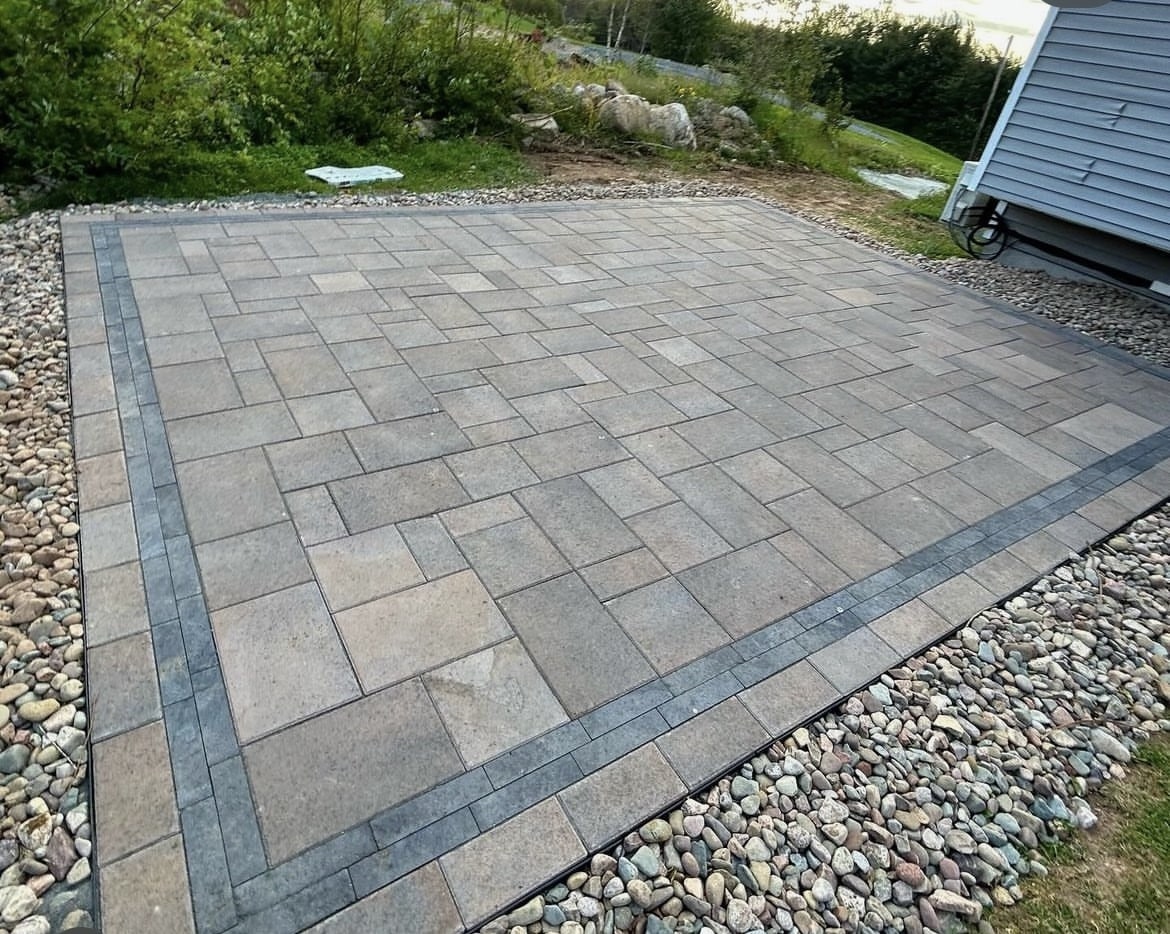
An interlock driveway in Halifax costs $30 to $45 per square foot installed with Doucet. Standard concrete pavers sit at the $30 end, and premium, textured or natural stone sits at the $45 end. That price includes the part you never see, 6 to 10 inches of compacted gravel base, and the base is what keeps a driveway flat through our freeze-thaw winters.
Interlock driveways at a glance
Installed price: $30 to $45 per square foot
Base: 6 to 10 inches of compacted gravel, joints filled with polymeric sand
Brands we install: Techo-Bloc, Permacon, Oaks and Shaw Brick
Old driveway: we tear out concrete, asphalt or pavers, haul it away and leave the site ready
Quote: we walk the property, then send one flat written quote within 24 hours of the visit

What the price per square foot covers
The number per square foot is for the whole driveway, not the pavers sitting on top. On a driveway the pavers are the part everyone looks at and the smallest part of the work. Most of the machine time and labour goes into what is underneath.
A typical job goes like this. We dig out the old surface and the soft material under it. We shape the ground so water runs away from the house and off the driveway. We bring in gravel and compact it in layers until we have the depth the ground needs. Then we lay the pavers, cut the edges, lock the edges in so the field cannot creep, sweep in polymeric sand and compact the whole thing again.
That is why a cheap paver quote should make you ask what is going under it. Two driveways can look the same on the day they are finished. The difference shows up a few winters later, when one is still flat and the other has ruts where the tires go.
Why the base matters in a Nova Scotia winter
Halifax does not get one long freeze. It freezes, thaws, rains and freezes again, over and over from late fall into spring. Every time water in the ground freezes, it expands and pushes up. When it thaws, the ground drops back down, but not always to the same spot.
A driveway built on a thin base over wet native soil moves with every one of those cycles. That is where dips, ruts and pavers sitting higher than their neighbours come from. A deep, compacted gravel base lets water drain through it instead of holding it, and it spreads the weight of a car over a wider area so the soil underneath is not getting punched in one spot.
Our paver work goes on 6 to 10 inches of compacted gravel base. Where a job lands in that range depends on the soil and on what drives over it. A walkway on well drained ground does not need what a driveway on clay needs. A driveway carries vehicles, so we build it toward the deep end, and soft or wet ground pushes it there too.
Compaction matters as much as depth. Gravel dumped in one thick pile and run over once will keep settling for years. It goes in layers, and each layer gets compacted before the next one goes on top.
Getting the old driveway out
Most interlock driveways in HRM replace something. Usually it is cracked asphalt or an old concrete pad, and sometimes it is a paver driveway that went down on a poor base and heaved. We do the tear-out ourselves. We break it up, load it out, haul it off and leave the site ready for the new install.
Concrete is the slowest to remove, especially when it is thick or has steel in it. We bring a hammer attachment for those pours. Removal work is priced from $150 an hour plus disposal, so the size and thickness of what is coming out shows up in your quote. Asphalt usually comes up faster. An old paver driveway is often the quickest of the three, since the pavers lift out instead of being broken.
Once the old surface is gone, we can see what was really under it. That is usually where the reason the old driveway failed shows up: no base, a thin base, or water with nowhere to go.
Interlock vs asphalt: how to think about it
We are not going to put asphalt prices in this article. It is still the comparison everyone makes, so here is how to weigh it without the numbers.
Asphalt usually costs less to put down. If the goal is a hard surface for the least money today, asphalt often wins that round. Pavers cost more up front, and what you are paying for is the look, the colour and texture choices, and the way the surface can be fixed later.
Repairs are where pavers earn it back. When asphalt cracks or heaves, it gets patched, and the patch always shows. When a section of interlock settles, the pavers come up, the base gets fixed, and the same pavers go back down with no patch line. A cracked or stained paver can be swapped out on its own.
Both surfaces live or die on the base. Asphalt on a bad base fails, and so do pavers. Whatever you choose, ask the contractor how deep the base is going and how it will be compacted.
Picking the paver
For a driveway you want a paver made to carry vehicles, not a thin patio paver. We install Techo-Bloc, Permacon, Oaks and Shaw Brick. Standard concrete pavers keep you near $30 a square foot. Textured, premium and natural stone finishes move you toward $45. Lighter colours show oil drips and tire marks more than darker blends, which is worth thinking about on a driveway that gets used hard.
What changes your quote
Size: the biggest factor, since the price is per square foot
Paver choice: standard concrete versus premium, textured or natural stone
Removal: what is coming out, how thick it is, and the disposal
Ground conditions: soft or wet soil means more base, and sometimes drainage work
Grading: if water runs toward the house or the garage, that gets fixed before anything is laid
Shape and details: curves, borders, inlays and tight corners all add cutting time

Grade first, then build
The one step we will not skip on any driveway is grading. Water has to run away from your foundation and off the driveway, not toward the garage door or down into the base. If the old driveway was pitched the wrong way, the new one will not be. Sometimes that means adding a drain at the low end. Our drainage work and our driveway work are done by the same crew, so it gets planned together instead of patched later.
If you are also thinking about a walkway, steps or a patio to go with the driveway, it usually makes sense to plan them at the same time so the grades and the paver colours line up. You can see more of our paver and hardscape work here.
Questions people ask
How much does an interlock driveway cost in Halifax?
With Doucet, $30 to $45 per square foot installed. Standard concrete pavers are at the $30 end and premium, textured or natural stone at the $45 end. That covers the dig out, the compacted gravel base, the pavers and polymeric joint sand. If an old driveway has to come out first, that work is priced from $150 an hour plus disposal and shows up in the same written quote.
How deep should the base be for an interlock driveway?
Our pavers go on 6 to 10 inches of compacted gravel base. Driveways sit toward the deep end because they carry vehicles, and soft or wet soil pushes it deeper. The gravel goes in layers, with each layer compacted before the next.
Is interlock better than asphalt for a driveway?
Interlock costs more up front. It is easier to repair, since pavers can be lifted and relaid with no patch line, and it gives you colour and texture choices. Both need a proper base to last through freeze and thaw.
Do you remove the old driveway?
Yes, the tear-out is part of the job. Old concrete, asphalt or pavers get broken up, hauled away and the ground is left ready for the new base. Thick or reinforced concrete gets a hammer attachment.
Why do interlock driveways heave?
Almost always water and a weak base. Water sits in thin base or soft soil, freezes, expands and lifts the pavers. A deep compacted gravel base and proper grading let the water drain out instead of freezing in place.
Every driveway we build carries a 1 year workmanship warranty, and Jack is on pretty much every job site. If you want a real number for your driveway, call us at (902) 221-4582 or send us a message. We will walk the property with you and send one flat written quote within 24 hours of the visit.